

You REJECT a lot of photos. That’s OK. Even if you go slow or shoot film like I often do, not every photo is a hit. But don’t delete them. They might be hiding something like this one was.
The photo is not bad. It’s just not great.
I used mostly the new Silver 6 presets for LR and Capture One for Dance in the Grove. But you can do the same things I’m showing you, and you’ll see why this works.
How often have you been disappointed with a photo?
I have. Hundreds of thousands of times. But I rarely delete them. More and more, I learn that sometimes my initial vision or process is wrong.
We should always try to get it in camera. If you’ve been to my Shadow Hackers LIV,E you know how seriously I take that. But understand tone also comes after you press the shutter, and sometimes it changes everything.

It was boring.
That’s why I never did anything with this. It’s not a bad photo. It just didn’t feel inspired at all. Even before the AI of Ai shock and awe scam photos, landscapes had to be special. We did have Flickr after all. I still do.
As I was working on the new Silver 6 presets and digging deep into the new Shadow Silver tools. I started looking in my archives for old photos that would let me test.
As I mentioned in the video, this is why presets are so important, even if you make your own. When I edit one photo, I am trying to edit that. But when I make a preset, I’m thinking about a concept and how it can work for not just me but the thousands of photographers who use Silver.
By pushing myself, I try edits I would not normally try. Sometimes they don’t work. Sometimes they let me discover things like the Aspen shadow-focused preset I made for this.
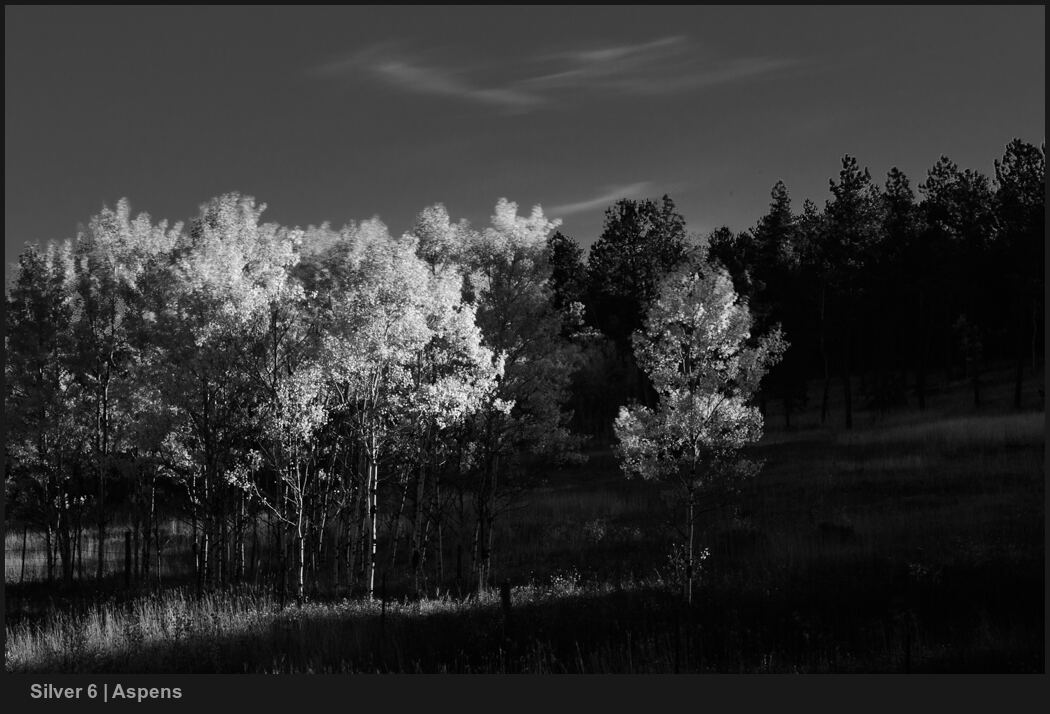
What makes it work?
See what I mean. You may not love the final photo as much as me. But it snaps. It has shadow and depth and a little mystery that makes sme want more.
It used tight isolation, shadows, and the 10 stops of tonal range.
It’s not about black and white. But black and white often helps us find things we did not see before.
When I save a photo that never quite worked, it’s usually because black and white simplifies that. And in the shadow study I did for Silver 6 presets, I took that further and left tonal timidness at the door.
What do you think? If you use Silver 6, or create your own recipes, try these bold shadow tools on some of your old images and see for yourself what happens.
Gavin Seim