June 19, 2012

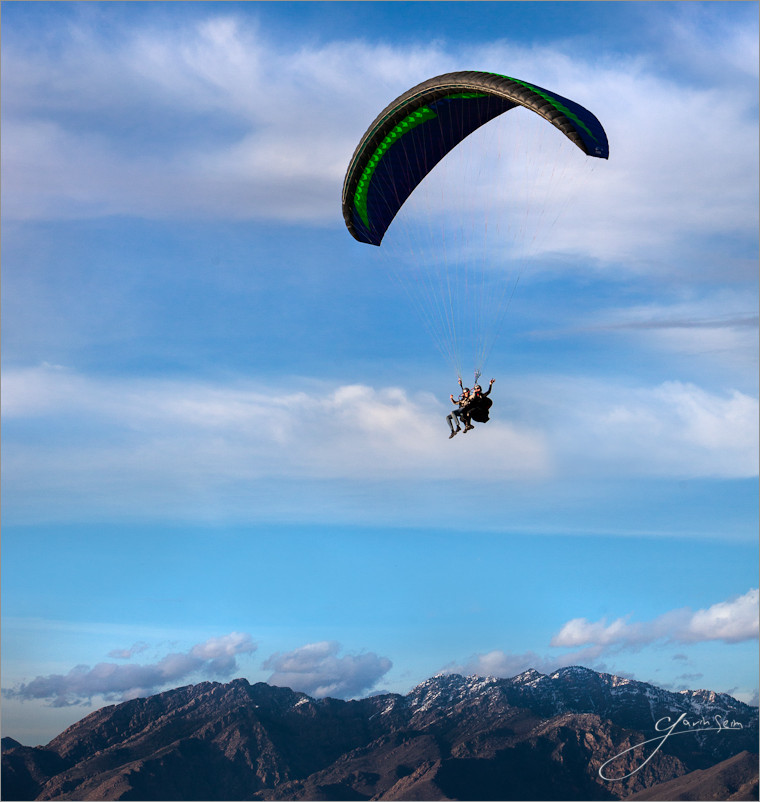
First Flight - Sondra's first ride with Steve. In a tandem over the hills of Lehi Utah. She came back grinning ear to ear.

It was Spring by the time we hit the last leg of our 2012 winter tour. We stopped in the Salt Lake area and parked overnight at Cabelas in Salt Lake City. Sondra went shopping the next day and I went hunting for a part I needed for the Super Camper. On the way I noticed a kite shop called Cloud 9. Since I had been wanting a stunt kite to carry along, I decided to stop in. Inside I did find a neat little stunt kite and took it with me. But I also found something more. I discovered Paragliding.

I’ve always wanted to fly and just the possibility of an affordable means to do so, using a wing compact enough to fit in a backpack, got me excited fast. I decided to take a tandem flight with an instructor the next day for about a hundred dollars. I wanted fly and I did. It was breathtaking. I thought it would be scary. It was, but only till Steve and I took off. Once I realized I was floating in the sky, suspended as from a cloud, I was instantly hooked.

Back at the trailer I praised the flight, telling my wife how amazing it was. I told her it was not that same fear as being afraid of heights, because once you’re up there you don’t feel at all unstable. You have control, can glide, gain altitude and land at your pleasure. Sondra started getting annoyed because I kept going on about it. She told me she WAS NOT going to fly. So,  good and kind husband that I am,  I said OK and shut up about it ;). Soon we headed down the road towards Nevada and I let it go, simply saying I might still have to learn on my own.

That night we camped by the Bonneville Salt Flats. In the evening after some him-hawing around, Sondra suggested that maybe she should give it a try. I laughed at her, but it was a good laugh. The next day we booked her a tandem for that evening and drove all the way back to the training hill outside of Salt Lake City. Sondra flew and when she landed she was grinning, giddy and could not stop telling me how much she she now wanted a paraglider of her own. It was so cool to watch her.

We were both hooked now. The ability to carry a wing with us on our travels, soaring and photographing. Even the ability to add a small motor if need be, to go to areas where wind currents might not favor us. There’s more to it than that of course and we plan to learn about that soon because now that we’re home, we can’t wait to get back down there and get certified. That’s something we hope to do later this year. It costs about a thousand dollars plus gear. So for now we just watch videos, look at photos and dream of free flight. Both of us.

With that I better get back to work, pay some bills and make some prints, because we want to go flying. Soon… Gav

For Photographers. Tech Notes…

Read More

June 17, 2012

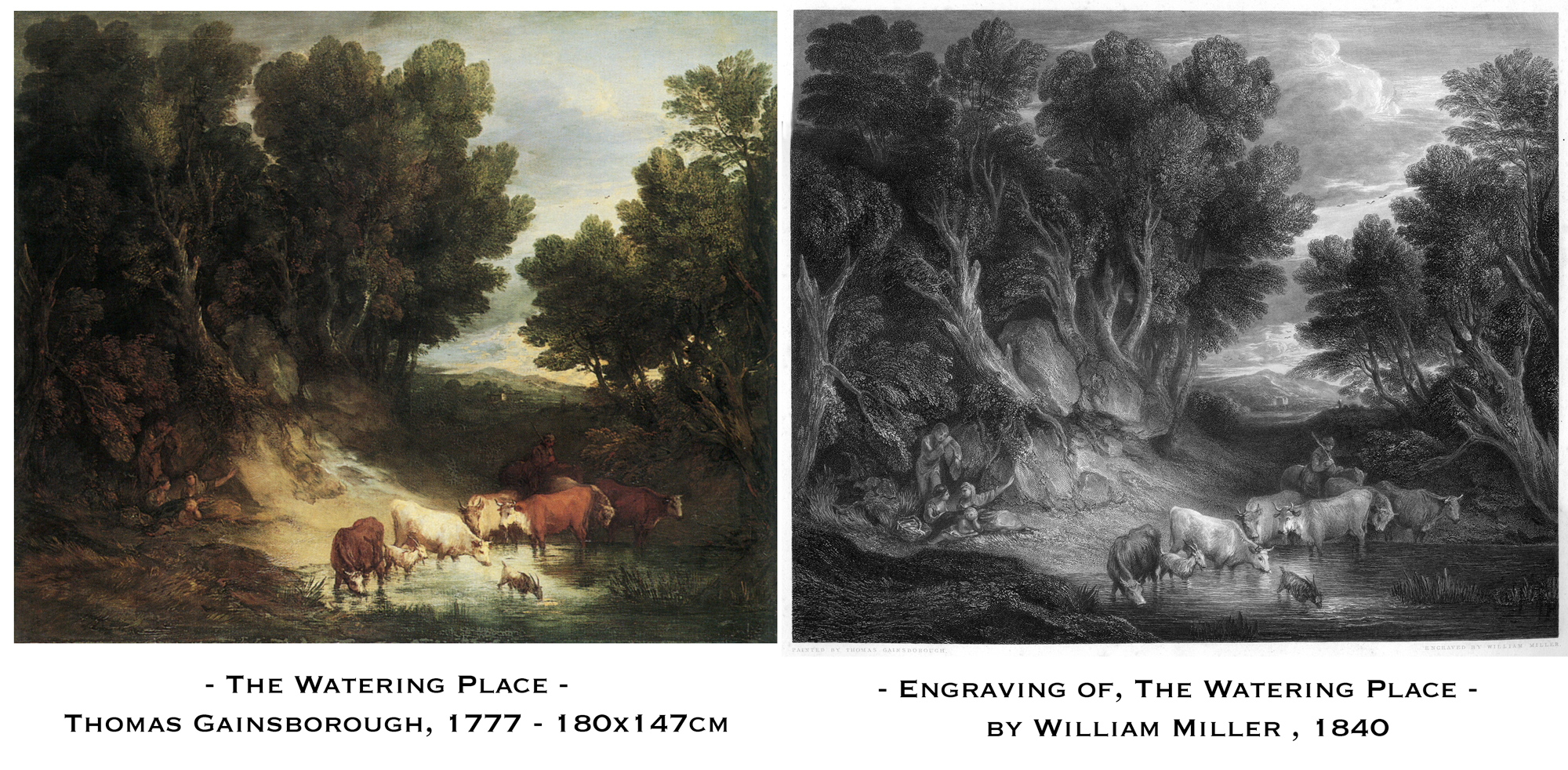
I wanted to start a new series looking at classical art on my journal, as I get a lot of my inspiration by studying the masters. It makes me study line and tone it a broad since instead of merely by what’s the popular fad of today.

Here’s Thomas Gainsborough‘s, The Watering Place from 1777. You’ve probably seen iconic work by Gainsborough in paintings like The Blue Boy. I also find myself wondering what he thought of Americans at this at this time, as the Revolution was now on.

It’s currently on display at National Gallery in London at at over 70 inches it will be quite impressive, reminding me once again why a wall piece can take an image from a little print to a piece of timeless fine furnishing.

Next to the painting is a beautifully done engraving of it made by William Miller many years later. It some ways I think the detailed beauty of the monochrome engraving is more impactful that the original. But both are beautiful and I’m guessing we’re seeing some fading the the painted work from how it was originally intended by Gainsborough.

There’s a simplicity here. Yet there’s also a subtle complexity. The cattle watering are clearly the subject, but as you look closer you see many details of supporting cast. The people relaxing under the trees, the distant farms, the birds in the sky. There’s something to be learned from this pieces that was praised by critics when it released.

What are your thoughts and what’s your favorite classical art this month.

Gav

Read More

May 22, 2012

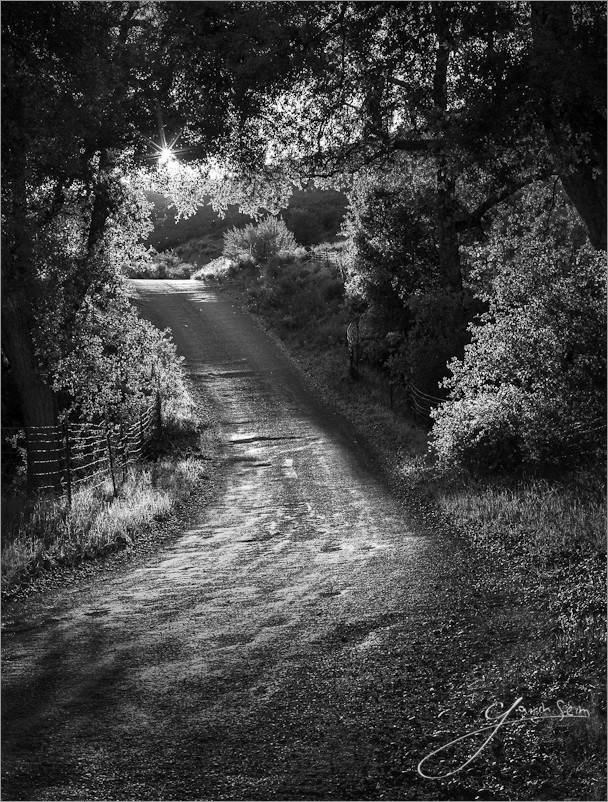
Memory Lane. Southern CA forest, Corral Canyon, Spring 2012.

It’s that peaceful time just before sunset in the hill country. Warm breezes and insects flying in the evening air. That gentle flair of the sun peeking thru the trees before it recedes into night.

I can almost taste the peaceful feeling we had that evening, my four year old standing next to me with his little camera and a cool mountain breeze drifting over the valley. It was in a remote forest near one of our favorite camp spots of the winter 2012 trip.

I’m finding the simple scenes often have more impact to people than the grand iconic landscapes. Say Arches or the Grand Canyon. Don’t get me wrong, I love the grand landscapes of America. But sometimes the simple idealistic scenes evoke something more. Each person adding their own experiences and emotions into a scene, triggering memories, sights and sounds.

Release details: Prints available. Contact the studio. Learn more about prices. Available prints…

For Photographers. How it was made…

Read More

May 18, 2012

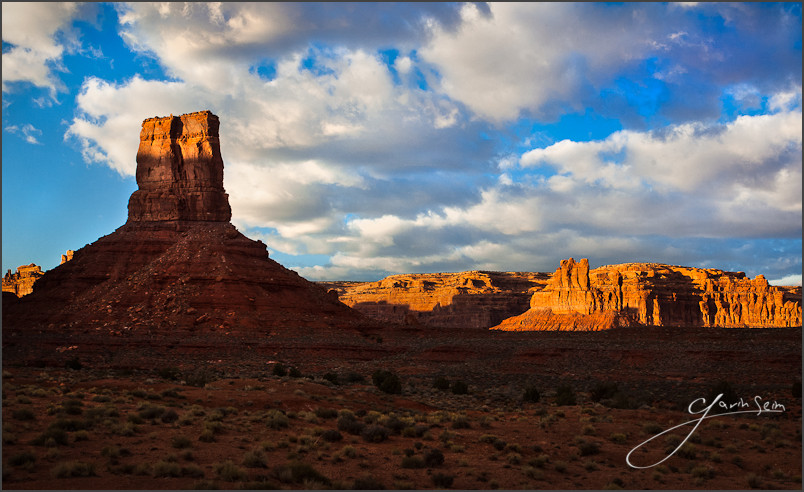
King of the Valley - A scene from Valley of the gods Utah. This is not the 4x5 frame discussed on the recorded (that had not been finished yet) but is is the area.

Photo Couch Podcast #30 MP3

Gavin just made a fast 4×5 exposure in the fading light of Valley of the gods Utah. He shares a few thoughts on being prepared and knowing our equipment.

_____

Subscribe in iTunesDirect Podcast FeedFacebook Page

Photo Couch is the companion podcast of Gavin’s f164 project. Sort of an audio journal. Nothing fancy here. Just short musings, tips, and thoughts on photography. You can listen below, or subscribe for free and get all the latest episodes. If you want more, you can also check out Gavin’s full podcast, Pro Photo Show.

Read More

May 13, 2012

The Forest Pool - In this split, we see the base toneapped merge and the final edited burns, dodges and detail work side by side. Not all images are this extreme, but tone control used well will always give your image that finishing touch.

by: Gavin Seim. Tone mapping and image processing without tone control is like having a lens without focus. It’s nothing new. Good shadows & contrast make an image. Without them we often get what I call the Flickr HDR. And trust me, you don’t want that 😉

Leveraging tone to keep the subject the subject and the supporting cast, supporting, is critical. Good tone control is what separates the men from the boys in the world of imaging and we can’t talk about it too much. I think we sometimes get distracted with the latest techniques. But generally they’re not really that new. They’re just new ways of doing things people have done on film for decades. Take HDR. On film, every image you made was HDR if you managed your light and processing well.

So then HDR. It’s not a style and it’s not judged on how many images you use, or whether you tonemap in Photomatix or Nik. It’s simply the management of a high range of light. You can do that with film, layers, tonemapping, channel mixing, brushes or in the camera.

In this example of a three exposure tone mapped image, you can see how much work I had to do to reign in the tone values. A tonemapped merge shows this more than a single file would. It tends to push everything to mid tones. After which, those tones have to be managed. Either that or you have mid-tone chaos. This is one reason I often manage dynamic range manually with layers, rather than tonemapping, but both are fine as long as you have a plan.

What I’m getting at is that an image must have a subject. Just one. Everything else needs to support that and it doesn’t matter if you have a single RAW or a tonemappped HDR with loads of range. Tonal control helps the eye focus. Without that focus you’ll nearly always have an image failure.

I’ve studied tone for years now with the legendary Ken Whitmire and even more on my own. It’s taught me to see light. Not simply that there is light. But what it’s doing for me. I see a lot of potentially great images that fail without any tone control. It generally means no cohesive subject. No one is talking much about tone. But if you do it right, the viewers eye is lead right to the subject, every time, no matter how many elements are in the scene.

Using the Zone System really helps with this as it quickly teaches you to manage tones better and make things as good as they can be in camera. See this article. On the editing side often a burn & dodge, brushes, or layering of lighter and darker frames makes the diffence. The bottom line is that while there is no rule on how we control tone, it must be done if we want a focused image that draws the viewers eye and showcases our subject.

This is something I go into at great length in my Lights & Shadows workshop and my EXposed DVD. But the main thing is to keep working with it. Cameras, the latest software and the latest techniques are useful things to study. But tone control is timeless and is never superseded. Without it we can expect our images to fail or to be little more than snapshots. Every time.

Happy tones… Gavin Seim

King of the Valley - Valley of the gods Utah, Spring 2012. A gentle tone controlled single exposure. See more of Gavin's American Pictorials on f164.com

Read More