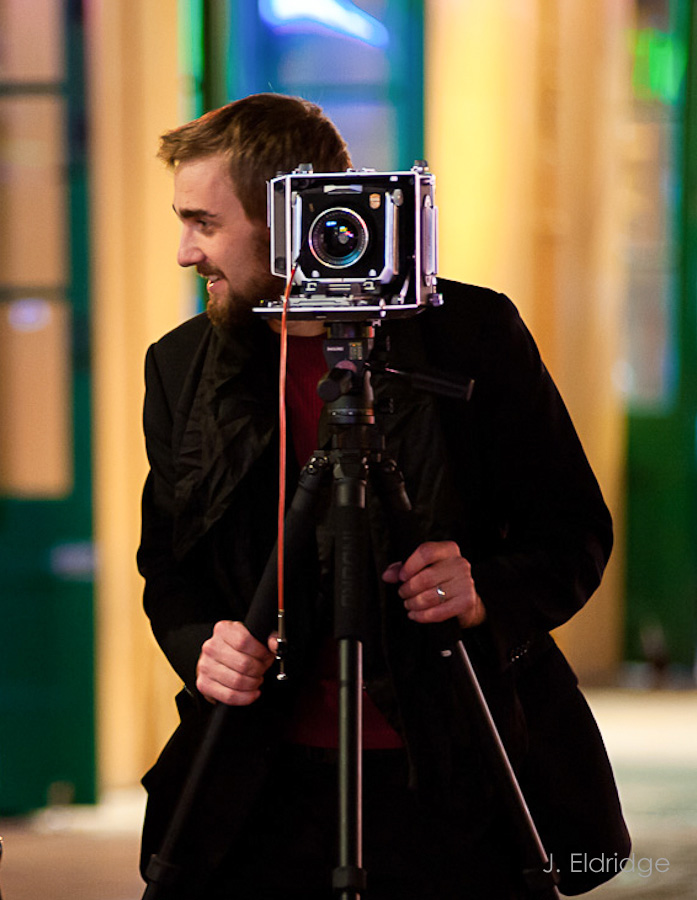
Gavin is headed out for a portrait and looking to make a single powerful image. lets talk about planing and building a mindset for the “photo” rather than “the photos”.
Photo Couch is the companion podcast of Gavin’s f164 project. Sort of an audio journal. Nothing fancy here. Just short musings, tips, and thoughts on photography. You can listen below, or subscribe for free and get all the latest episodes. If you want more, you can also check out Gavin’s full podcast, Pro Photo Show.
The Bath – A Portrait that got Gavin banned form Facebook. Read more here.
by Gavin Seim: We all should to consider how social media effects us in the long term. I recently released a new portrait called The Bath. I posted this portrait on my Facebook page and the next morning I logged it to find it had not only been removed, but I had been banned from Facebook for 24 hours as PUNISHMENT for supposedly violating an “unnamed” responsibility of using Facebook. I assume they placed this under nudity, even though it contains none.
There’s is nothing inappropriate about the photo and did not even consider that it would get taken down. These are my kids and I intentionally made sure nothing showed that could be taken wrong in the slightest. So here I am, a business on Facebook, being treated like a three year old, slapped on the hand for being naughty. And that’s it. No appeal, no recourse. I call it a Facebook Spanking!
Even as a paying advertiser who has spent thousands of dollars with FB, I don’t have a real contact or way to get help. Just a black mark on my record, meaning that in the future, the punishments get worse. Some random thing could even get the PERMANENTLY REMOVED from Facebook. What happens to the years of work and thousands of dollars building my network and pages? Who knows. The thing is, they can do whatever they want. It’s their network. Just like every private network.
This got me thinking about how reliant we’ve become on social networks. Even someone like me who blogs actively on his own sites, relies on Facebook, Twitter and others to let people know about those articles and get traffic flowing. There’s nothing wrong with using those tools, but when we rely on them all our eggs start rolling into one basket. What happens if we get cut off. How many of us have maintained traffic sources that “we control”? Things like newsletters. Why? because I don’t like my business being under the thumb of corporate management that won’t even talk to me.
Personally this prompted me to start a fresh email list called the Light Letter. I want to make sure I can connect with those interested in my work on “my terms”. That’s not to say I won’t use Facebook, Google +, Twitter and other professional networks. But this experience really showed me that we as people and professionals need to become less reliant and start controlling our own content and traffic. I hope others will follow and start thinking about Content Freedom. As people who rely on content communication as part of our business, it’s time we make sure we can keep it flowing.
What are the solutions? I think a well made engaging newsletter is one. The list is not dead. Organic SEO traffic is good too. Maybe even traditional mail. I don’t have all the answers, but I’m thinking. What ideas do you have for controlling our content on our terms rather than on the whims some corporate management who couldn’t care less?
I’ll be going into more in depth on this soon as we look at how we can keep our content ours. You can also join my Light Letter below if you’re interested. Either way I encourage to check out LightLetter.com to see how I set it up. It’s been converting quite well.
by Ansel Adams – Tom Kobayashi at Japanese-American Internment at Manzanar, California, 1943. Follow the image link for more and some nice direct scans vs print scans.
by Gavin Seim: Ansel is one of my favorite pictorialists, though he did some beautiful portraits as well (check out this link for some cool ones you may not have seen before). I go on binges of searching, perusing books and trying to find overlooked snippets that offer ideas to refine my work. I was up around 2AM recently doing this and I stumbled across a little gem I had not seen before. The final interview of Ansel Adams by Milton Estrerow.
<<<<< >>>>>
“Two months ago, I spent two afternoons interviewing Ansel Adams at his home in Carmel, California. It was one of the most memorable experiences I have ever had. He was warm, brilliant, imaginative, sensitive, funny. We talked about everything from music to Georgia O’Keeffe to the glories of Point Lobos to how to unload my camera. I had planned to return to Carmel for further sessions, but he died on April 22. Following are excerpts from his last interview.
Summer 1984
MILTON ESTEROW
Who among contemporary photographers do you admire?
I like Joel Meyerowitz for color. I think he has superior color sense. Mary Ellen Mark is tremendous. The trouble is that a great deal of new photography seems sort of experimental, without any great motive. I feel very bleak about a lot of it. So many don’t care about craft. I like Olivia Parker. Don Worth is good, and Nicholas Nixon. George Tice is very subtle. Bill Clift, yes, he’s something. Roy DeCarava is very important…
This classic roundtable features the endless banter of The Three. But we actually talk about a lot of cool things as we look at the latest gear, talk about tough realities of the industry and even kick into some Facebook and marketing tips in our very long after show. If you listen to the entire after show, you get a +2.
Brought to you by the Seim Effects and the Amazing EXposed workshop – seimeffects.com
New Mexico case forcing people to photograph homosexual weddings. An artist is not, nor should ever be obligated to produce art they morally disagree with. SHAME on New Mexico courts – Article 1, Article2
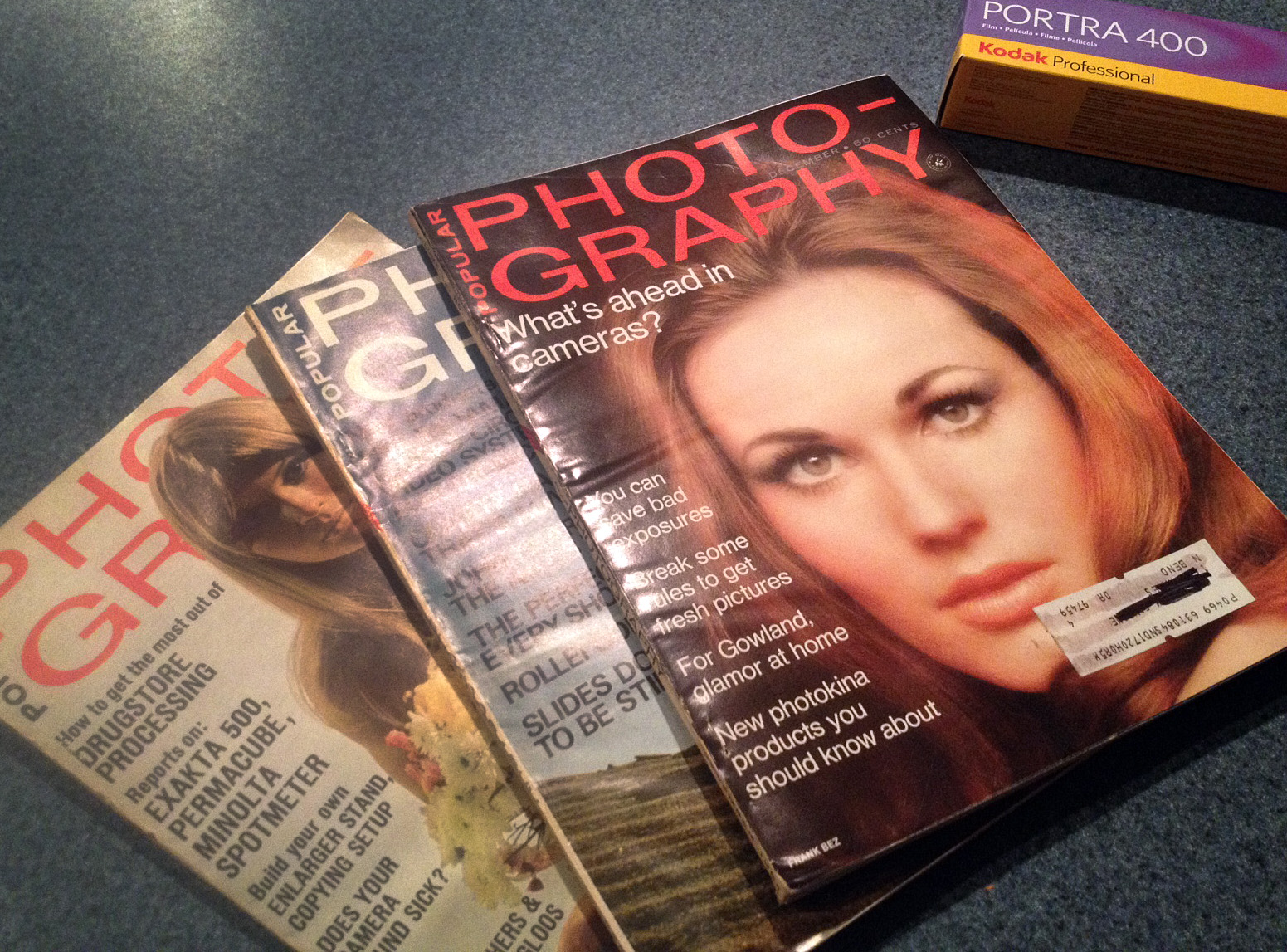
Vintage 1968 photo magazines I bought. It’s refreshing to see articles on how to make good photos, instead of how to fix ones that were made wrong.
by Gavin Seim: (rev 05/13)
It was Spring of 1968. Motor Trend had just crowned the GTO car of the year, Eddie Adams just made one of the most iconic images in history and in a few months the Detroit Tigers would win the World Series. Pentax was telling us they made “fine photography easy.” and the Polaroid swinger was happily swinging off shelves. Topics ranged from the quality of drugstore printing to the latest spot meters. And yes, publishers knew that bare breasted woman sold photo magazines. Even then.
It was in the Spring of 2011 when I jumped back into film. I had cut my teeth on it back in the late 90’s. That was around the time the Unibomber was captured, scientists cloned sheep and Titanic sunk into theaters with a splash. As I grew, digital did too and soon took over the game. It was fresh, exciting and before long, even practical. Soon professionals everywhere were laying down their film for what were essentially 35mm SLR’s with a bit less detail. It was in some ways a downgrade, and yet digital does offer many advantages.
So I decided to go back and take film seriously. Loading it up for my travels to use it alongside digital. At first it was for the simple reason that a well scanned large format negative could produce vastly more detail than today’s digital. So I bought a classic 4×5 Linhoff and went to work. And it was indeed work, I picked one of the harder formats but it would turn out to be well worth it.
– 4×5 HP400 Film, Linhof Technika IV –
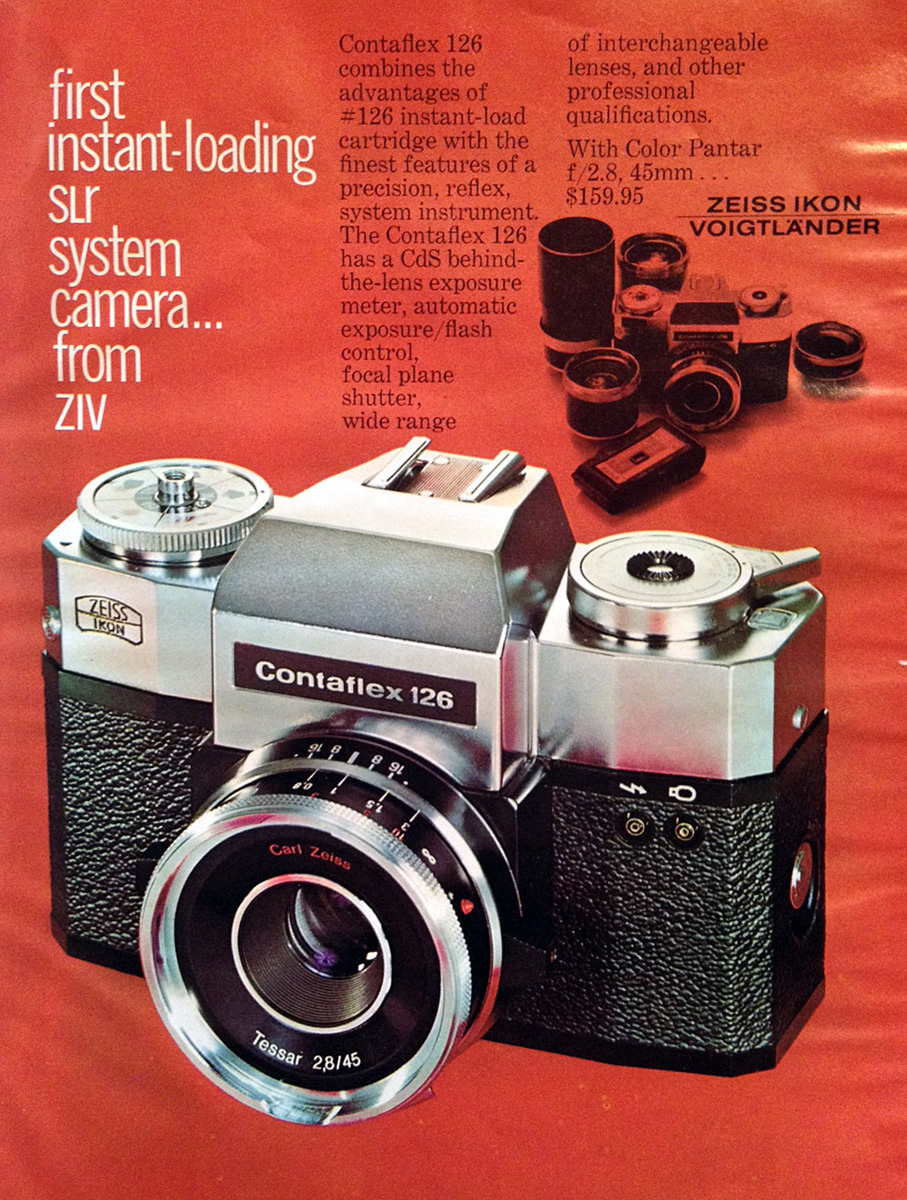
Popular Photography 1968, ad for the Contaflex 126.
A few months earlier in ’68, the world saw Charlton Heston tell his primate overlord “Get your stinking paws off me, you damned dirty ape!” A classic was born, that would be somewhat tarnished by less impressive sequels. Meanwhile The soft focus filter was in vogue. Forty-four years later my wife would stand next to me in the living room looking at a cover portrait from a 1968 magazine and say. “It’s blurry.”
Back in the twenty-first century we’re making coffee and I grab my Olympus 35RC rangefinder to take a photo of my kids helping out on the kitchen counter. My daughter giggles adorably and I realize I forgot to wind the film. I react quickly before they move and release shutter. One frame and it’s back to lattes.
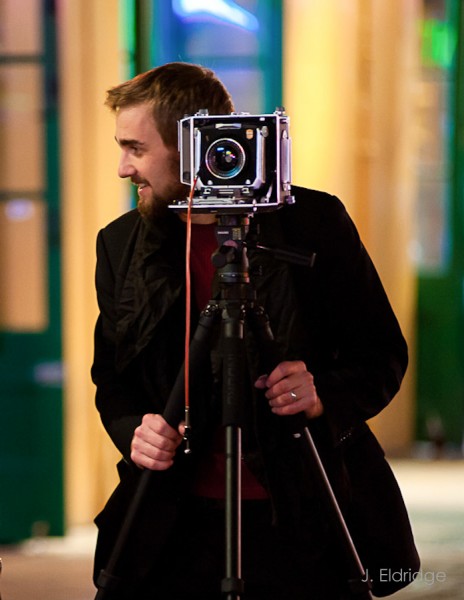
I’m in New Orleans with my Linhof. Jan, 2012. It quickly draws a crowd and I’m happily chatting. Photo by Jason Eldridge.
I was not the first to be out there rooting for film in this digital era. Many of the best Pictorialists never stopped using it. People like John Canlas,Ian Ruther and a few others had also been sharing their passion for silver for awhile. But I was not so into the romance, I just wanted the quality. People acted like I was a little crazy, but they still were a bit breathless when they saw my Linhoff Super Technika IV that came out around 1956. It started to become a part of my brand. Not just in my pictorials, but in my portrait work.
Next I started talking about film. I started talking about how I blended it with digital. Scanning, editing, printing. I have nothing against the traditional darkroom and I hope to build one when I have more space. But I’m a digital kid and I have a workflow there. There was a method to my madness. I needed to be able to get great images made and printed large in reasonable time for a reasonable cost.
Soon I had a Jobo ATL1000. A remarkable machine in which you load with a small batch of film and a very small amount chemicals and return about thirty minutes later to finished images, color or black and white. The next step was to scan on my V700 using a wet scanning attachment and then into Lightroom and other tools for the finished image. The result was amazing resolution from this 60’s era camera that has not changed much in half a century. I can get around 100-200MP of detail from 4×5 and a beautiful organic feel that digital somehow misses.